
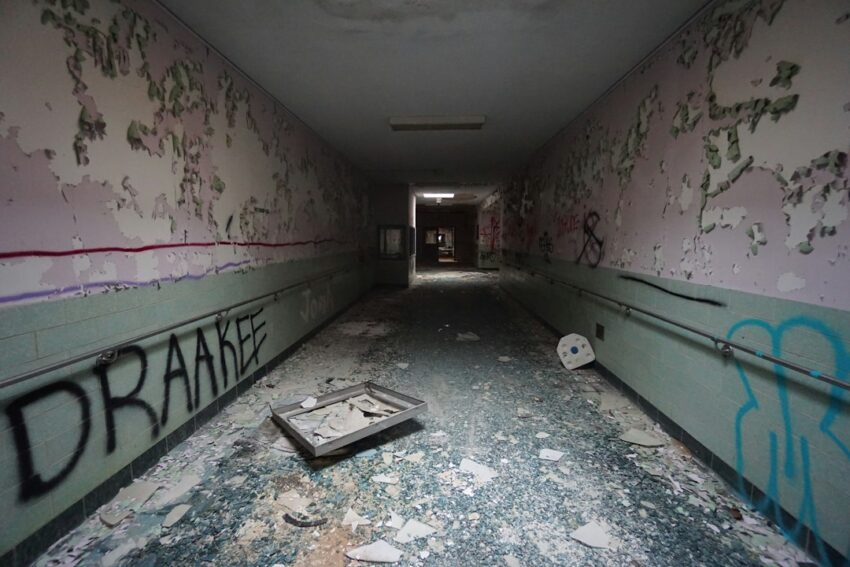
Horror games aren’t just about surviving jump scares and managing your sanity meter—they’re digital playgrounds where developers hide mind-blowing secrets that reward the most curious players. From cryptic puzzles that took the entire internet to solve to comedy relief moments that shatter tension in the best possible way, PC horror titles are packed with easter eggs that range from terrifying hidden mechanics to hilarious breaks from the nightmare. This list dives into the most legendary secrets across both classic and modern horror games, complete with practical details on how to find each one. Whether you’re hunting for hidden gameplay modes, decoding developer messages, or just looking for that perfect “wait, WHAT?” moment, these easter eggs prove that horror games have way more to offer than what’s on the surface.
P.T.’s Legendary Looping Hallway Mystery
Before Konami pulled it from the PlayStation Store in 2015, P.T. had been downloaded over 1 million times by players desperate to solve what became gaming’s most infamous puzzle. This “playable teaser” for the canceled Silent Hills wasn’t just a demo—it was a cryptographic nightmare wrapped in a looping hallway, and its secrets remain legendary precisely because most players can never access them again.
The premise sounds simple enough: walk through the same L-shaped hallway repeatedly until something changes. But P.T. turned this mundane loop into psychological warfare, hiding progression triggers behind mechanics so obscure that the internet collectively lost its mind trying to crack them.
The 10-Step Pattern Explained
The most mind-bending secret? Certain events only trigger when you walk exactly 10 steps from specific starting points, then stop dead. Not 9 steps. Not 11. Exactly 10. The game tracks your footfalls with zero visual feedback, punishing players who rush or hesitate.
This walking pattern controls when Lisa (the ghost haunting you) appears, when phones ring, and when cryptic voice messages play. Players discovered this through brute force trial and error, spending hours documenting every footstep. The pattern felt less like game design and more like a ritual—walk 10 steps, wait for the clock to strike midnight, listen for a baby’s laugh. Miss one element and you’re stuck looping forever.
Hidden Messages You Probably Missed
Between loops, P.T. scattered messages in Swedish, Spanish, and English across walls and objects. “I walked. I could do nothing but walk” appears in blood. Radio broadcasts whisper about family murders in multiple languages. Most players never saw these because they required pixel-perfect camera angles during specific loops.
The removal from PSN transformed these secrets from clever design into archaeological artifacts. Consoles with P.T. still installed became collector’s items, selling for thousands of dollars. What started as marketing for Silent Hills became a digital ghost story—appropriate for a game about haunted hallways that now haunts gaming history itself.
Dead Space’s Chapter Title Conspiracy
Isaac Clarke’s nightmare aboard the USG Ishimura hides one of gaming’s most ingenious spoilers in plain sight. Take the first letter from each of Dead Space’s twelve chapters, and you’ll spell out “NICOLE IS DEAD” — a massive plot twist revealed through an acrostic that’s been staring players in the face since 2008.
This wasn’t discovered immediately. Players needed to complete the game, experience the gut-punch revelation that Isaac’s girlfriend Nicole died before he even arrived, then look back at their chapter select screen to realize the developers planted this message from the start. Chapter names like “New Arrivals,” “Intensive Care,” “Course Correction,” and “Obliteration Imminent” feel natural enough that the pattern remains invisible during your first playthrough.
The brilliance lies in how it transforms subsequent runs. Once you know, every chapter title becomes a grim reminder that Isaac’s entire motivation is built on denial and hallucinations. The game stops being about rescuing Nicole and becomes a tragedy about a man whose mental breakdown drives the entire narrative forward. It recontextualizes every interaction with her, every hopeful message, every reason Isaac pushes through the necromorph hordes.
Spotting it yourself requires patience. Don’t spoil it for friends experiencing Dead Space for the first time, but on your second playthrough, pause at each chapter transition and jot down that first letter. Watch the message build chapter by chapter. It’s the kind of meticulous design choice that elevates Dead Space from great horror game to masterclass in environmental storytelling — proof that sometimes the scariest revelations don’t jump out at you. They wait patiently in the menu screen for you to notice.
Comedy Breaks: When Horror Gets Hilarious
Horror games thrive on tension, but the best developers know when to shatter that atmosphere with pure absurdity. These comedic easter eggs reward dedicated players with moments so ridiculous they completely recontextualize hours of psychological torment.
The UFO Ending That Broke Silent Hill
Silent Hill 2’s UFO ending remains one of gaming’s greatest tonal whiplashes. After enduring James Sunderland’s psychological nightmare for 16-20 hours across two complete playthroughs, players who collect three specific items unlock a finale where aliens abduct James while he screams about conspiracies.
The requirements are deliberately obscure:
- First playthrough: Use the Blue Gem in Rosewater Park
- Second playthrough: Collect the Obsidian Goblet in the Historical Society
- Second playthrough: Find the Blue Gem again in Dog House
Your reward? A cutscene featuring Team Silent staff in alien costumes, complete with cheesy sci-fi sound effects and James breaking character entirely. It’s horror game comedy gold that makes Silent Hill 2’s devastating endings even more impactful by contrast.
Tofu Survivor Mode Explained
Resident Evil 2 Remake preserved one of Capcom’s strangest traditions—letting players control a giant block of tofu through zombie-infested Raccoon City. Tofu Survivor originated in the 1998 original as a joke mode after completing the ultra-difficult 4th Survivor scenario.
This walking soy product has strict limitations that make the challenge brutal. Tofu can only use knives and carries minimal healing herbs. No guns, no heavy weapons, just desperate stabbing and dodging. The Remake expanded this with multiple tofu characters, each with different knife durability and herb counts, because apparently one murderous food block wasn’t enough.
Amnesia’s Rubber Duck Room
Amnesia: The Dark Descent terrorizes players with sanity mechanics and invisible water monsters. Then you stumble into the developer commentary room. Among the serious behind-the-scenes insights sits a bright yellow rubber duck that squeaks obnoxiously when clicked. No horror context, no creepy twist—just a duck being a duck.
Developers include these moments because horror burnout is real. After hours of dread, a perfectly timed joke creates relief that makes subsequent scares hit harder. It’s tension management disguised as silly fun, and it works every single time.
Doom 2016’s Love Letter to Classic Gaming
id Software stuffed 13 fully playable classic Doom levels into Doom 2016, one hidden in each campaign mission. These aren’t just visual nods – they’re complete recreations of original 1993 levels that snap you back to pixelated sprites and MIDI metal in seconds.
Each classic level lives behind a secret lever that pops open a retro portal. Miss one and you’ll blast through the entire campaign without knowing these time capsules exist.
Finding All 13 Secret Levers
The levers blend into Doom 2016’s industrial hell aesthetic, but they’re always tucked in explorable areas off the main path. Here’s your hunting strategy:
- Explore every side room before hitting mission objectives – levers never block progress
- Listen for the distinctive hum of secrets when you’re near hidden areas
- Check your map completion percentage after each mission – it tracks secret discoveries
- Look for destructible vents and alternate pathways that break from linear sections
- Scan for out-of-place industrial switches on walls in larger arena spaces
Pro tip: The Praetor Suit upgrades that reveal secrets on your map make lever hunting infinitely easier. Prioritize those perks early.
What Makes These Levels Special
Step through a portal and Doom 2016’s modern graphics vanish. You’re suddenly controlling the original Doomguy in full retro glory – chunky pixels, 2D sprites, classic weapon sprites, and that unmistakable 1993 movement feel.
The levels pull straight from the original games. You’ll recognize E1M1’s iconic opening, complete with the exact enemy placements and secret walls longtime fans memorized 30 years ago.
These aren’t just collectibles – they’re playable nostalgia bombs that reward completion with unique collectible figurines for your Fortress of Doom. Each one takes 3-5 minutes to blast through, making them perfect bite-sized throwbacks between modern demon massacres.
Five Nights at Freddy’s: Easter Egg Madness
Scott Cawthon turned easter eggs into a religion with Five Nights at Freddy’s, and Golden Freddy is the perfect example of his madness. This paranormal animatronic has a 1 in 100,000 chance of appearing on your screen when you flip down the camera monitor. That’s not a typo. Players could spend hundreds of hours in the pizzeria and never see this jump scare, making it one of gaming’s rarest secrets.
The FNAF series weaponized randomness in ways horror games had never attempted before. Hidden newspapers with cryptic details, random chance hallucinations, and background Easter eggs that only appear under specific conditions created an entire community of lore hunters. Players weren’t just trying to survive the night anymore—they were screenshotting every frame, datamining files, and comparing notes to piece together the story of murdered children and possessed robots.
What made Cawthon’s approach revolutionary was how it democratized discovery. Unlike traditional secrets with specific unlock conditions, FNAF’s probability-based events meant anyone could stumble upon something groundbreaking during any playthrough. The Freddy nose honk on the poster. Shadow Freddy materializing in your office. The random chance of triggering different mini-games that revealed crucial backstory.
This philosophy transformed horror gaming’s relationship with secrets. Before FNAF, easter eggs were usually rewards for skilled players or completionists. Cawthon proved that unpredictability and microscopic attention to detail could build mythology more effectively than exposition dumps. Games like Poppy Playtime and Amanda the Adventurer adopted similar approaches, hiding lore fragments in random events and background details that require frame-by-frame analysis to decode.
The community became obsessed with finding that next impossible secret, turning every FNAF release into a treasure hunt where the real game happened outside the game itself.
Hidden Perspective Shifts and Gameplay Changes
Some horror games hide entire gameplay modes that completely flip the experience on its head. These aren’t just cosmetic changes—they fundamentally alter how you experience terror.
First-Person Mode in The Evil Within 2
Beat The Evil Within 2 once, and you’ll unlock a secret first-person mode that transforms the entire game. What started as a third-person survival horror adventure becomes an intimate nightmare where threats feel twice as close.
The perspective shift changes everything:
- Enemies appear faster and more threatening without the wider field of view
- Resource management becomes more challenging when you can’t see as much of your surroundings
- Jump scares hit harder when you’re locked into that claustrophobic viewpoint
- Combat encounters require completely different tactics without the camera awareness
This mode isn’t just a gimmick—it’s practically a new game. Players who thought they mastered the original run discover fresh terror when they can’t peek around corners as easily.
Phasmophobia’s Ouija Board Secrets
The Ouija board in Phasmophobia looks like simple ghost-hunting equipment, but it’s hiding specific question triggers that veteran players exploit for evidence gathering.
Ask the right questions and you’ll get precise information:
- “How old are you?” reveals the ghost’s death age
- “Where are you?” pinpoints the ghost’s current room location
- “How did you die?” sometimes triggers unique responses
- “What do you want?” can reveal aggressive intent
But here’s the catch—every question drains your sanity by 5-40% depending on how it’s phrased. Aggressive questions like “Are you French?” or location-based queries hit harder than simple yes/no prompts.
Smart players memorize the least costly questions to maximize information while keeping their sanity intact. It’s a hidden risk-reward system that separates casual ghost hunters from the pros who understand the mechanical depth lurking beneath the surface.
Literary and Pop Culture Horror References
Horror games become exponentially creepier when they tap into the genre’s rich literary and cinematic heritage. These references aren’t just fan service—they create layers of meaning that amplify dread for players who recognize the source material.
Alan Wake’s Literary Homages
Remedy Entertainment stuffed Alan Wake with so many Stephen King nods that it basically functions as an interactive love letter to the master of horror. The game opens with a direct quote from King, but the real genius lies in how deeply the references penetrate the mechanics.
The manuscript pages scattered throughout Bright Falls don’t just provide lore—they predict events before they happen, mimicking King’s narrative structure where characters feel trapped by fate. This creates genuine unease as you read about your own upcoming death moments before it occurs.
The typewriter scene pulls straight from The Shining. Instead of “All work and no play makes Jack a dull boy,” Wake’s obsessive typing reveals his fractured mental state through repetitive, increasingly disturbing prose. The Twin Peaks influence saturates the Pacific Northwest setting, complete with a quirky diner, mysterious locals, and reality-bending darkness. Even the thermos collectibles reference Agent Cooper’s coffee obsession.
Layers of Fear’s Artistic Easter Eggs
Layers of Fear transforms horror art history into interactive nightmare fuel. The Victorian mansion constantly reshapes itself around recreations of disturbing masterpieces—Goya’s “Saturn Devouring His Son,” Fuseli’s “The Nightmare,” and Rembrandt’s haunting self-portraits.
The symbolic rats scurrying through hallways reference disease and decay in classic horror imagery, but they also tie to the painter’s deteriorating sanity. Each rat glimpsed represents another fragment of his fractured psyche.
Meanwhile, Outlast‘s Murkoff Account documents reveal corporate conspiracy threading through the entire horror experience. These files expose illegal experiments, government cover-ups, and financial motives behind the asylum’s atrocities. The mundane bureaucratic language makes the horrors more believable—and therefore more terrifying.
These references work because they ground supernatural terror in familiar cultural touchstones, making the impossible feel disturbingly plausible.
The Real Game Starts When You Look Closer
From cryptic acrostic messages hidden in chapter titles to probability-based secrets that might never trigger, these easter eggs prove that horror games reward the obsessively curious. The best secrets transform single-playthrough experiences into infinitely replayable treasure hunts—whether you’re hunting for comedy relief moments that shatter tension or discovering hidden gameplay modes that completely reimagine familiar nightmares.
What makes these discoveries so special is how they reveal the personality behind the horror. Developers who hide rubber ducks in sanity-draining nightmares or let you play as sentient tofu aren’t just building games—they’re creating relationships with players dedicated enough to explore every dark corner and test every bizarre theory.
Time to revisit those horror titles collecting dust in your Steam library. Boot up that game you thought you’d mastered and start looking for the secrets you missed. Check behind every door, read every document, and don’t dismiss that weird hunch about walking exactly 10 steps from a specific spot. The developers hid something there for you—and the hunt is half the fun. Your favorite horror game has more to show you. You just have to be curious enough to find it.